
E-Commerce Platform For Artists (UX Case Study)
In Nigeria today, Artists are emerging in every part of the country. The artworks they put out every day are beautiful and inspirational but the problem is that they do not have a centralized system to help them showcase their artworks to the wider world. They resort to roadside showcases hoping that someone will get out of their car to buy from them.
Social media platforms like Twitter have helped to alleviate this issue but it isn’t enough because some of these artists are not social media savvy and they might not have a large following to showcase their art, getting influencers to help promote their artwork might also be an expensive gamble and it only lasts for a few days depending on the deal with the influencer.
This is where Artsy comes in, This platform will help artists showcase their artwork to a wider audience, and connect with potential buyers and clients while also earning a living through the platform. The main goal of this project is to help artists monetize their artworks and to be discovered by art lovers.
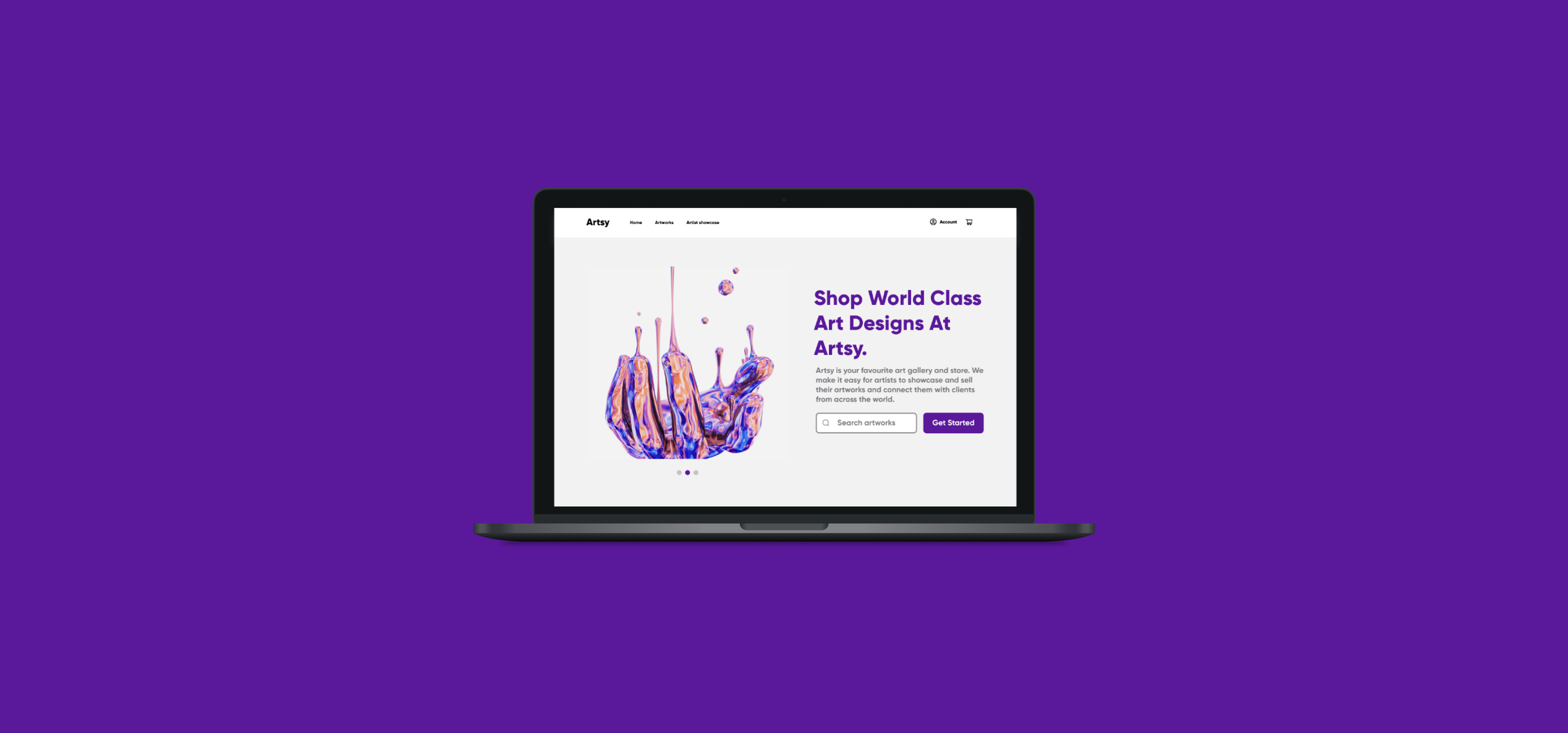
UI Design, User Research & User Testing
3 weeks
Figma, Miro & Figjam
Challenge
A brief was sent out to me by my mentor to design an art platform where people can buy, sell, and connect with potential clients. He wanted a solution that would encourage people to buy art online more regularly. His goal was to boost the online presence and market share for artists.
Research Phase
User Interviews
The first step was creating user interviews. Creating the interviews helped me understand what the users needed, it turned out to be a very interesting process. I wanted to gain more in-depth insight into users’ behaviors, motives, and preferences when it came to buying and selling artwork.
The questions asked were:
Will you consider buying or selling from an art platform?
35%
Improved onboarding process
25%
Increase in user retention
84%
Increase in time spent on website


Process
Research & Analysis: We conducted user interviews, surveys, and analyzed in-app analytics to understand the pain points and user needs. We also studied competitor apps and industry trends to gather insights
Information Architecture: Based on the research findings, we restructured the app's navigation and content, prioritizing features and information according to user needs.
Wireframing & Prototyping: We designed low-fidelity wireframes to visualize the new layout and navigation, iteratively refining them based on user feedback. Afterward, we built a high-fidelity, interactive prototype to test the design.
Usability Testing: We conducted usability tests with a diverse group of users to validate the design and identify areas for improvement. Based on the feedback, we made necessary adjustments to the design.
Visual Design & Style Guide: We developed a cohesive visual language, including color schemes, typography, and iconography, ensuring consistency throughout the app. We also created a style guide to maintain design consistency in future updates.




“ With our new visual branding and language in place, the new Shopify brand clearly captures the essence of our current and target customer base, our employees, and our values. ”
Tobias Lütke
CEO, Co-founder | Shopify


Conclusion
The StreamLine mobile banking app redesign successfully addressed the usability issues, resulting in a more intuitive and user-friendly experience. The improved UX/UI design led to increased user adoption, engagement, and satisfaction, demonstrating the value of a well-designed template for UX designers.